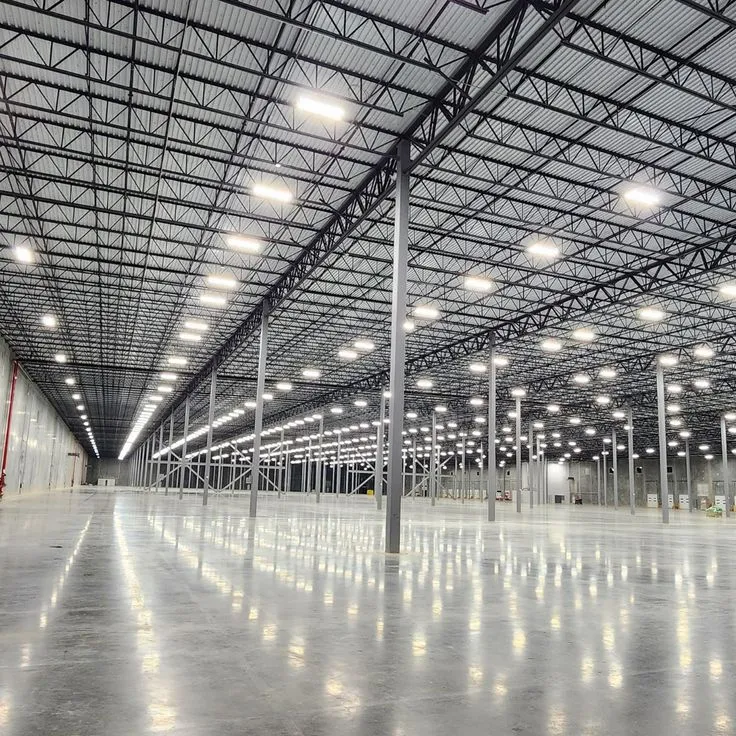
Warehouse lighting is usually discussed in terms of fixtures, ceiling height, lamp output, controls, and energy use. The floor is rarely part of that conversation, yet its color, sheen, cleanliness, and condition can influence how much available light is reflected into the working space. In high-bay facilities with long aisles and dense racking, a dark or badly worn floor may absorb more light than a lighter, well-maintained surface. Flooring decisions can therefore support visibility when they are coordinated with the wider lighting plan.
Floor Finish Affects Perceived Brightness
A warehouse does not need a mirror-like surface to benefit from light reflectivity. Lighter resinous finishes and well-maintained topcoats can return more ambient light than dusty, stained, or dark concrete.
The effect is especially noticeable in long storage aisles where racks block some direct illumination. A brighter floor can help reduce visual contrast between lit and shadowed areas, making the space feel more consistent.
Managers should still treat lighting levels as an electrical and safety-design issue. Flooring can complement suitable fixtures, but it should never be used as a replacement for adequate illumination.
Color Should Match the Operation
Very light floors can improve reflectivity, but color selection should also consider housekeeping and traffic. Tire marks, pallet debris, dust, and spills may be more visible on some finishes than others.
Facilities evaluating Warehouse Resin Flooring In Nj should compare sample colors under the actual lighting used in the building. A finish that looks bright in a showroom may appear different under LED fixtures, skylights, or mixed industrial lighting.
The best choice balances visibility, maintenance, and the visual needs of the facility rather than selecting the lightest color automatically.
Sheen Changes Over Time
A newly installed topcoat may have a consistent sheen, but forklift traffic, abrasive debris, cleaning, and maintenance gradually affect the surface.
High-turning zones, staging areas, and loading approaches may lose gloss faster than protected sections beneath racks. This can make light reflectivity less uniform across the building.
Maintenance teams should therefore view floor appearance as something that changes with use. Routine cleaning and timely repair help preserve a more consistent finish across active traffic zones.
Cleanliness Influences Reflectivity
Even a light-coloured floor reflects less effectively when it is covered with dust, rubber residue, or oily film. Housekeeping is therefore part of the lighting conversation.
Seamless resinous surfaces can simplify sweeping and mechanical scrubbing because they reduce porous areas and dirt-trapping joints. However, cleaning products and pads should be appropriate for the installed topcoat.
Overly abrasive maintenance can dull the finish unnecessarily, while filming detergents may leave residue that changes its appearance.
Markings Need Strong Contrast
Warehouse floors often carry pedestrian lines, staging boundaries, equipment zones, and other operational markings. A brighter background can make those markings easier to distinguish when colors are selected with sufficient contrast.
Managers should plan the color system before installation rather than deciding line colors after the base floor is complete. The same shade may look very different against pale grey, medium grey, or darker resin.
Visibility should also be checked under normal working illumination, not only in daylight.
Contractor Selection Should Include Finish Performance
When comparing an Epoxy Floor Company In Green Brook, facility managers should ask how the proposed resin system will handle abrasion, tire marking, cleaning, and the desired level of sheen.
A warehouse floor needs more than a bright color. Mechanical preparation, crack and joint repair, high-build resin layers, and a suitable protective topcoat all influence how the surface performs after forklifts and pallets return.
A contractor should therefore discuss both the visual objective and the mechanical demands of the warehouse instead of treating appearance as a separate decorative decision.
Lighting Upgrades and Flooring Can Be Coordinated
Facilities sometimes replace lighting fixtures and flooring during the same modernization project. Coordinating the two can help managers assess the finished environment more accurately.
Sample flooring can be viewed under the proposed fixture color temperature and brightness before the final choice is made. Traffic markings can also be tested for visibility under the updated lighting.
This coordination is particularly useful in large distribution centers where small decisions repeated across thousands of square feet can noticeably change the overall visual environment.
Conclusion
Warehouse flooring can play a supporting role in facility visibility because color, sheen, cleanliness, and surface condition influence how available light is reflected through the space. That does not make flooring a substitute for proper lighting design, but it does make the floor part of the visual environment.
By coordinating resin color, topcoat performance, housekeeping, safety markings, and lighting upgrades, facility managers can create a more coherent workspace. The strongest approach considers both how the floor performs under heavy traffic and how it contributes to the way employees see and navigate the warehouse every day.