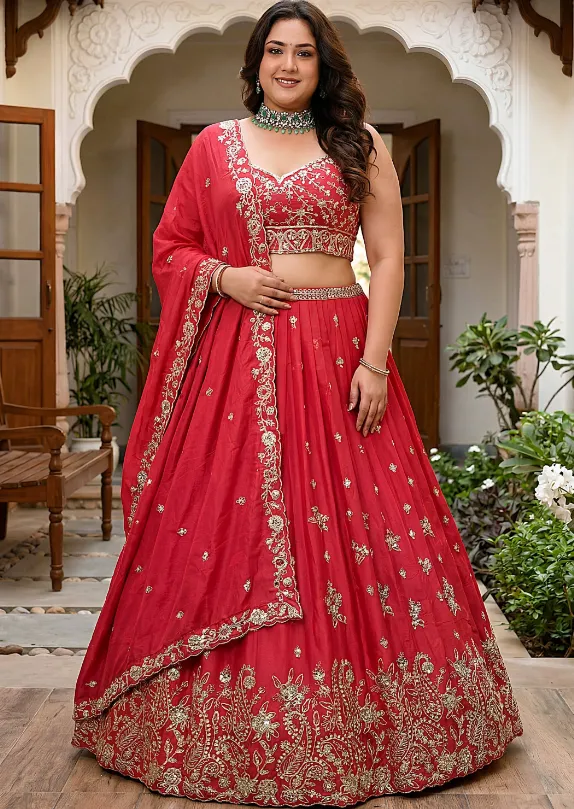
Indian occasion wear should work with the wearer’s proportions, not force the body to fit one rigid silhouette. A plus size lehenga choli can offer the drama of a full skirt with enough flexibility to balance the blouse, waistline, dupatta, and embroidery according to the event. For weddings, engagements, festive functions, and receptions, the strongest result usually comes from thoughtful construction rather than simply choosing the most decorated design.
Good fit is especially important with a lehenga because three separate pieces have to work together. The skirt should sit securely, the blouse should allow comfortable movement, and the dupatta should add shape without overwhelming the outfit.
Start With Proportion, Not a Size Number
Size labels can vary between garments, so actual measurements matter more than the number printed on the tag. Waist, bust, blouse length, sleeve opening, and skirt length should all be checked before ordering.
Let the Skirt Create Balance
A lehenga does not need extreme volume to look festive. A moderate flare can create movement while keeping the silhouette balanced. Vertical embroidery, evenly distributed motifs, and borders that are not excessively wide can help the skirt look structured rather than bulky.
Choose the Blouse as Carefully as the Skirt
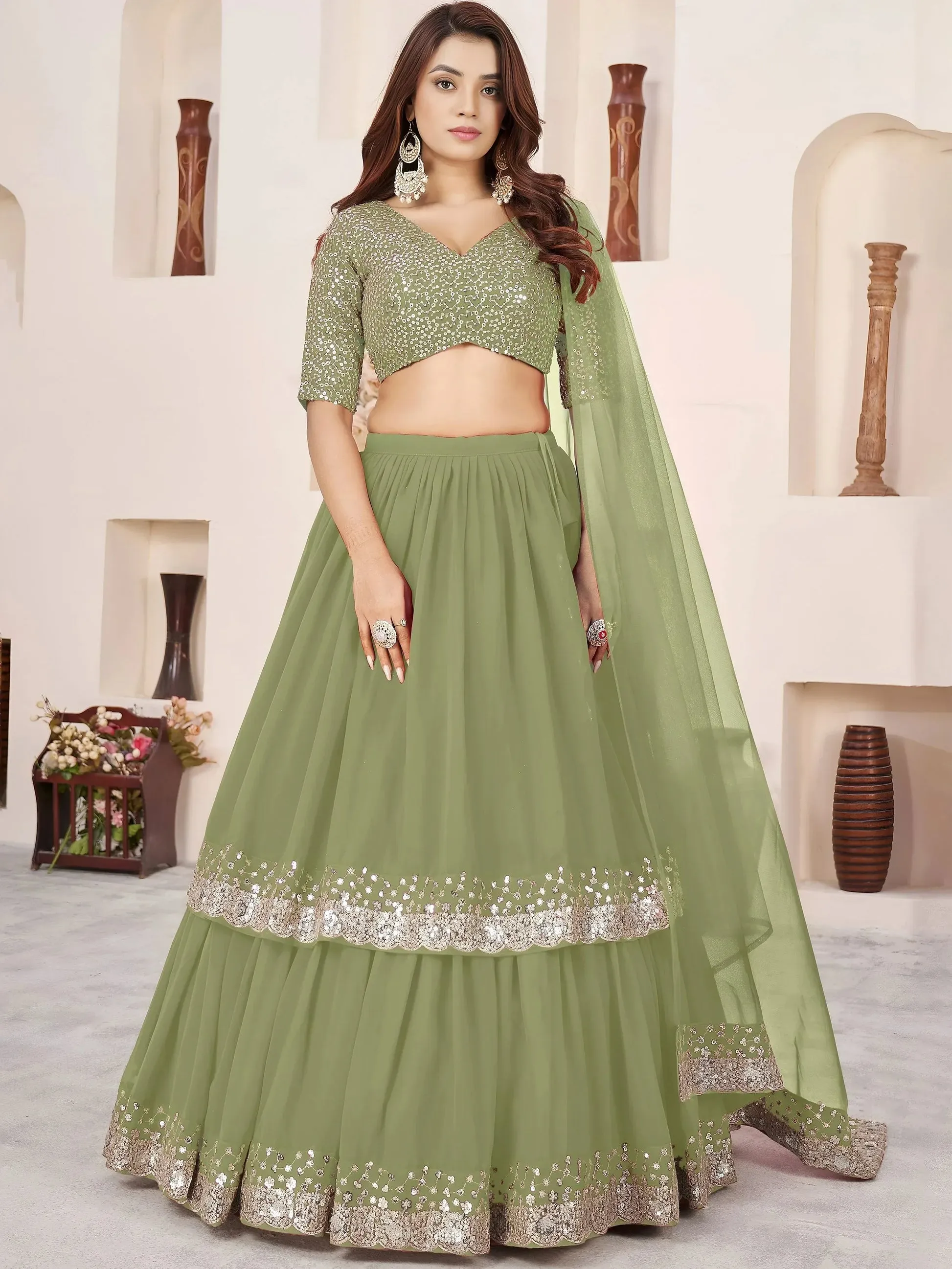
When shopping for a lehenga for women, attention often goes first to the skirt, but the blouse has just as much influence on the final look. Shoulder fit, neckline, sleeve length, and blouse length determine whether the outfit feels comfortable and proportionate.
A slightly longer blouse can provide more coverage, while a well-cut shorter blouse can work beautifully when the waistband sits securely. The best option depends on personal preference rather than a fixed rule about body shape.
Sleeve and Neckline Ideas
Different details can change the visual balance:
-
Elbow-length sleeves can create a classic, structured look.
-
Short sleeves keep the outfit lighter for daytime functions.
-
V-shaped or open necklines can create a longer visual line.
-
Higher necklines can work well with statement earrings.
-
A defined shoulder line can balance a fuller skirt.
The priority should always be ease of movement around the arms and shoulders.
Use Embroidery With Purpose
Heavy embroidery is not automatically more flattering or more festive. Placement matters. Concentrated work at the hem, neckline, or blouse can create clear focal points, while evenly spread motifs may give the outfit a softer appearance.
For evening functions, sequins, zari, or metallic details can catch artificial light. Daytime weddings may suit threadwork, floral embroidery, mirror accents, or lighter surface decoration. Choosing detail according to the event keeps the outfit from feeling overloaded.
Think About the Dupatta as Part of the Shape
A dupatta can add vertical lines, coverage, contrast, or colour. Draping it over one shoulder keeps the front open and shows the blouse clearly. A diagonal drape can create more structure, while a lighter open dupatta adds softness.
Avoid Too Much Fabric in One Area
If the lehenga already has a full skirt and detailed blouse, a very heavy dupatta can make the outfit feel crowded. A lighter net, organza, or georgette dupatta may create better balance. Secure it only where needed so it remains comfortable.
Choose Colour for the Event, Not for “Rules”
Plus-size fashion does not need to be restricted to dark colours. Jewel tones, pastels, bright festive shades, ivory, pink, green, blue, and metallic palettes can all work beautifully.
Instead of asking whether a colour is “slimming,” consider whether it suits the venue, lighting, embroidery, and personal preference. A coordinated colour story often looks stronger than choosing a shade only because it is considered safe.
Check the Details Before the Event
Before the occasion, wear the full outfit with the intended footwear and accessories. Walk, sit, raise your arms, and check the hem.
A final fitting should confirm:
-
The waistband stays secure without digging in.
-
The blouse does not pull across the shoulders.
-
The skirt clears the floor with the chosen shoes.
-
The dupatta stays in place with minimal pinning.
-
Jewellery does not catch on embroidery.
Conclusion
A plus-size lehenga looks its best when fit, proportion, and construction are treated as design choices rather than afterthoughts. The right skirt flare, blouse shape, embroidery placement, dupatta weight, and colour can create an occasion look that feels balanced and easy to wear. Instead of following restrictive rules about what certain body types should avoid, women can focus on accurate measurements, comfortable movement, and details that suit the event. A well-chosen lehenga should support the wearer throughout the celebration while still delivering the festive presence that makes the outfit special.